American Express Global Business Travel

Consolidating Three Sites Into One High-Converting Platform

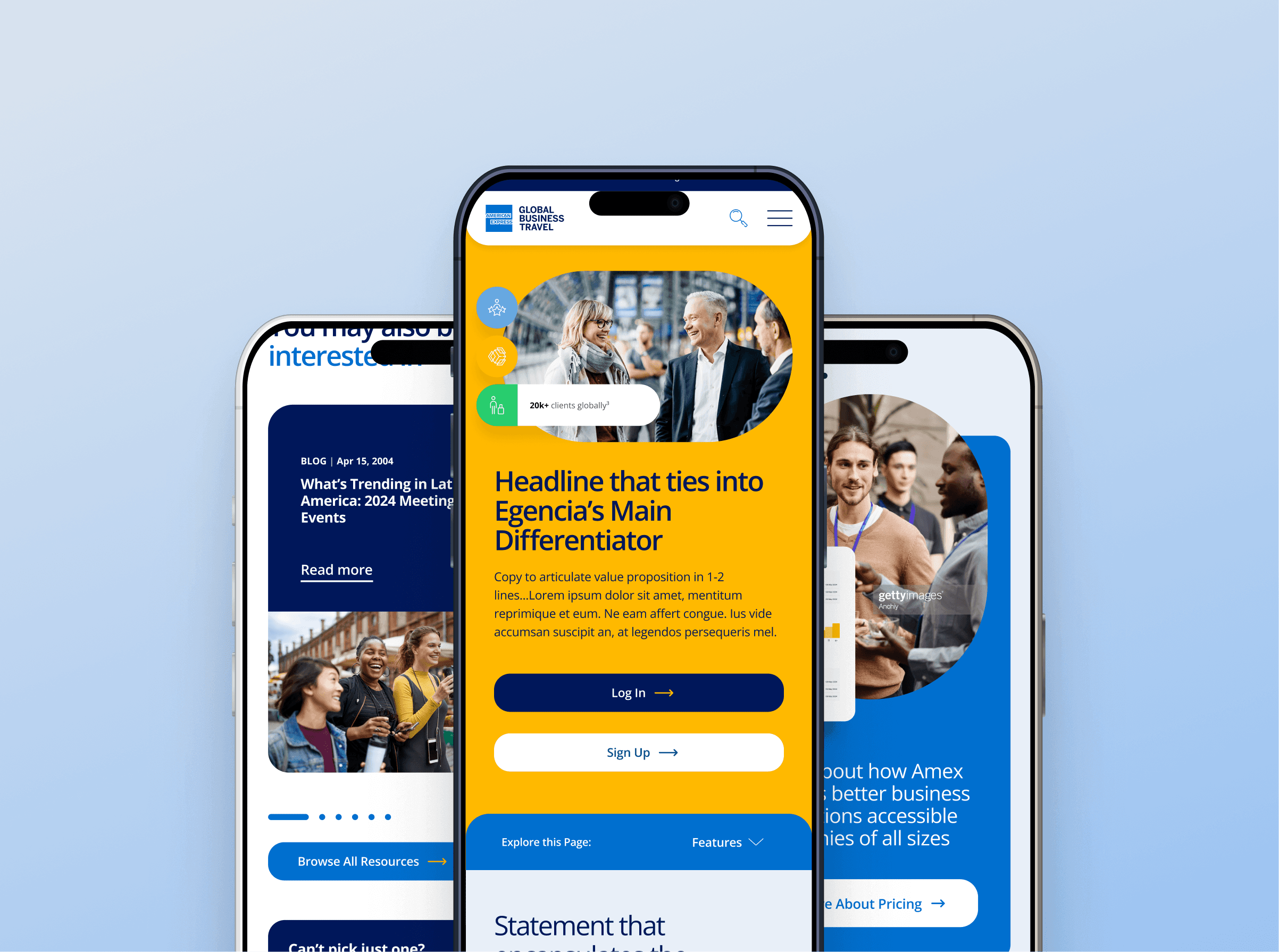
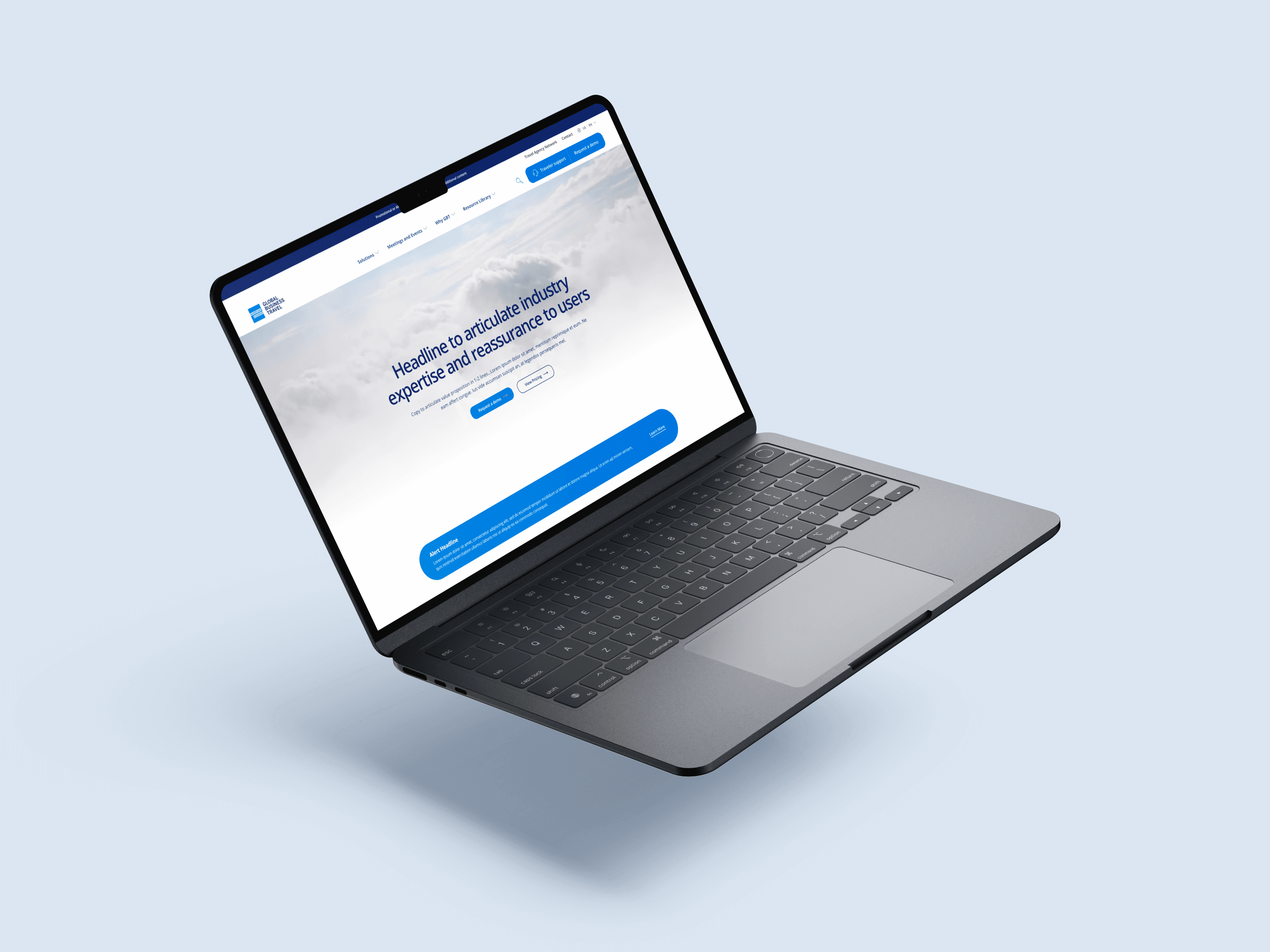
American Express Global Business Travel's recent acquisitions left them with three disconnected marketing sites that weren't converting. We rebuilt their entire digital experience from the ground up—collapsing complex navigation into an intuitive structure and designing modular templates that increased site conversions by 80% within six months of launch.
The Challenge

Following multiple acquisitions, AMEX GBT faced a fragmented digital experience across three separate marketing sites. While they'd recently invested in a visual rebrand, the site wasn't converting. Users didn't understand the solution offerings, and the experience hindered scalability and lead generation.

The Stakes: Consolidate three sites into one unified platform without disrupting SEO or losing leads—while finally making the value proposition crystal clear.

The navigation alone presented a significant design challenge: their initial vision included 7-8 top-level menu items with multiple nested layers—a reflection of the complexity they were trying to wrangle. We needed to honor the strategic thinking behind it while creating something users could actually navigate.

My Role

My Role

My Role

UX Lead

Timeline

Timeline

Timeline

March – July 2025

Client

Client

Client

American Express Global Business Travel

My Leadership & Approach

I deconstructed their navigation completely and rebuilt it from the ground up.

Working closely with our content strategist, I simplified their proposed IA down to three top-level menu items while preserving the strategic intent behind what they wanted to achieve.

I facilitated a 2-hour working session with their primary stakeholders to walk through the new direction. We had in-depth discussions about the IA, and their insights on the business and customer journey allowed us to refine the approach collaboratively. That session became the foundation for the entire redesign.

On this project, UX wasn't just one workstream—it was the through-line connecting everything.

I shaped how content strategy evolved, how our designer approached the visual system, how our BA documented components for development, and how pages ultimately got built. This meant being deeply embedded across disciplines while also driving my own design execution—keeping the team aligned and the experience cohesive from strategy through implementation.

We worked in sprint cadence: two sprints for wireframes, then moved directly into design. I guided our UI designer on how to use the existing system while ensuring new components felt custom and beautiful but remained repeatable and scalable.

Working closely with our content strategist, I simplified their proposed IA down to three top-level menu items while preserving the strategic intent behind what they wanted to achieve.

I facilitated a 2-hour working session with their primary stakeholders to walk through the new direction. We had in-depth discussions about the IA, and their insights on the business and customer journey allowed us to refine the approach collaboratively. That session became the foundation for the entire redesign.

On this project, UX wasn't just one workstream—it was the through-line connecting everything.

I shaped how content strategy evolved, how our designer approached the visual system, how our BA documented components for development, and how pages ultimately got built. This meant being deeply embedded across disciplines while also driving my own design execution—keeping the team aligned and the experience cohesive from strategy through implementation.

We worked in sprint cadence: two sprints for wireframes, then moved directly into design. I guided our UI designer on how to use the existing system while ensuring new components felt custom and beautiful but remained repeatable and scalable.

Key Decisions I Made

Modular template system

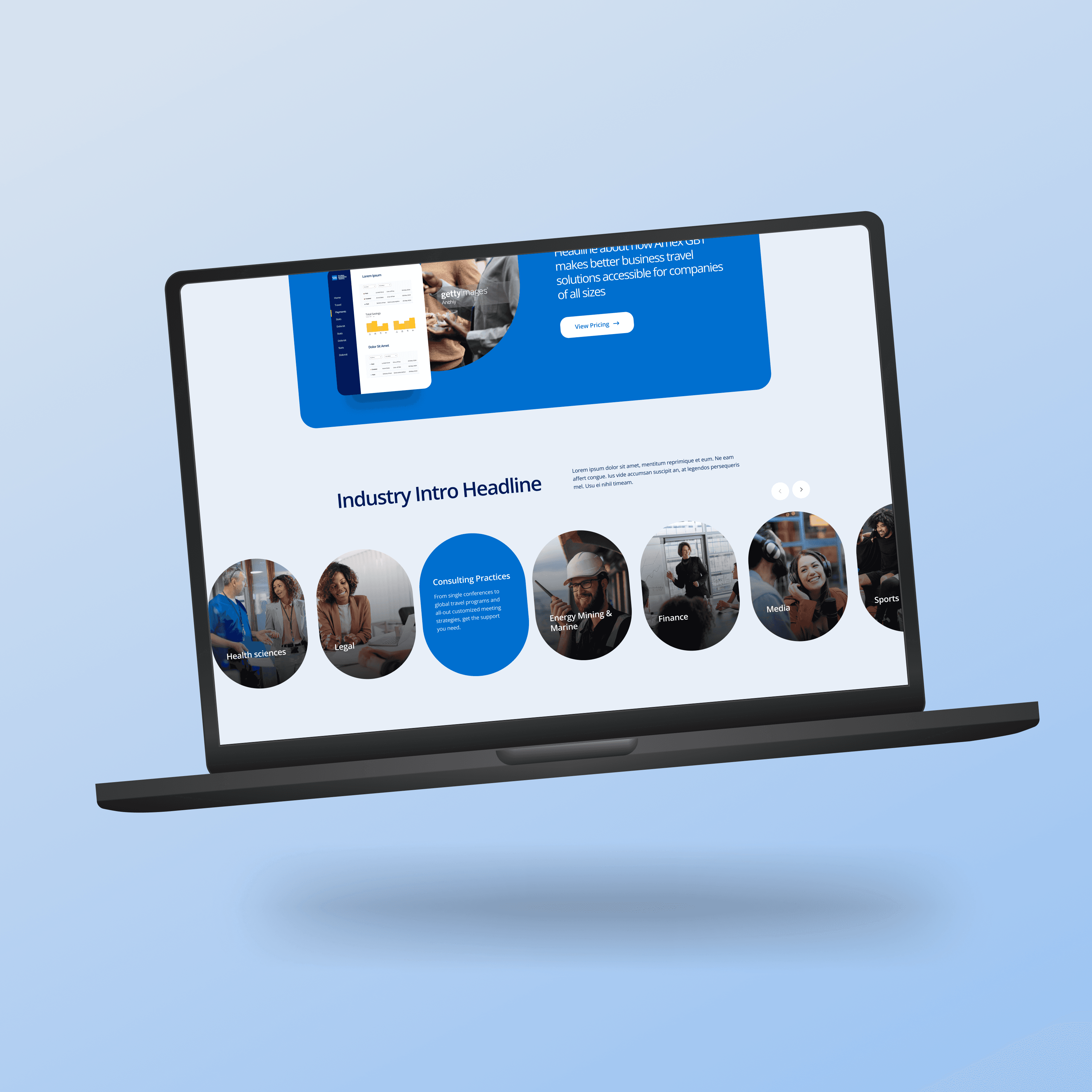
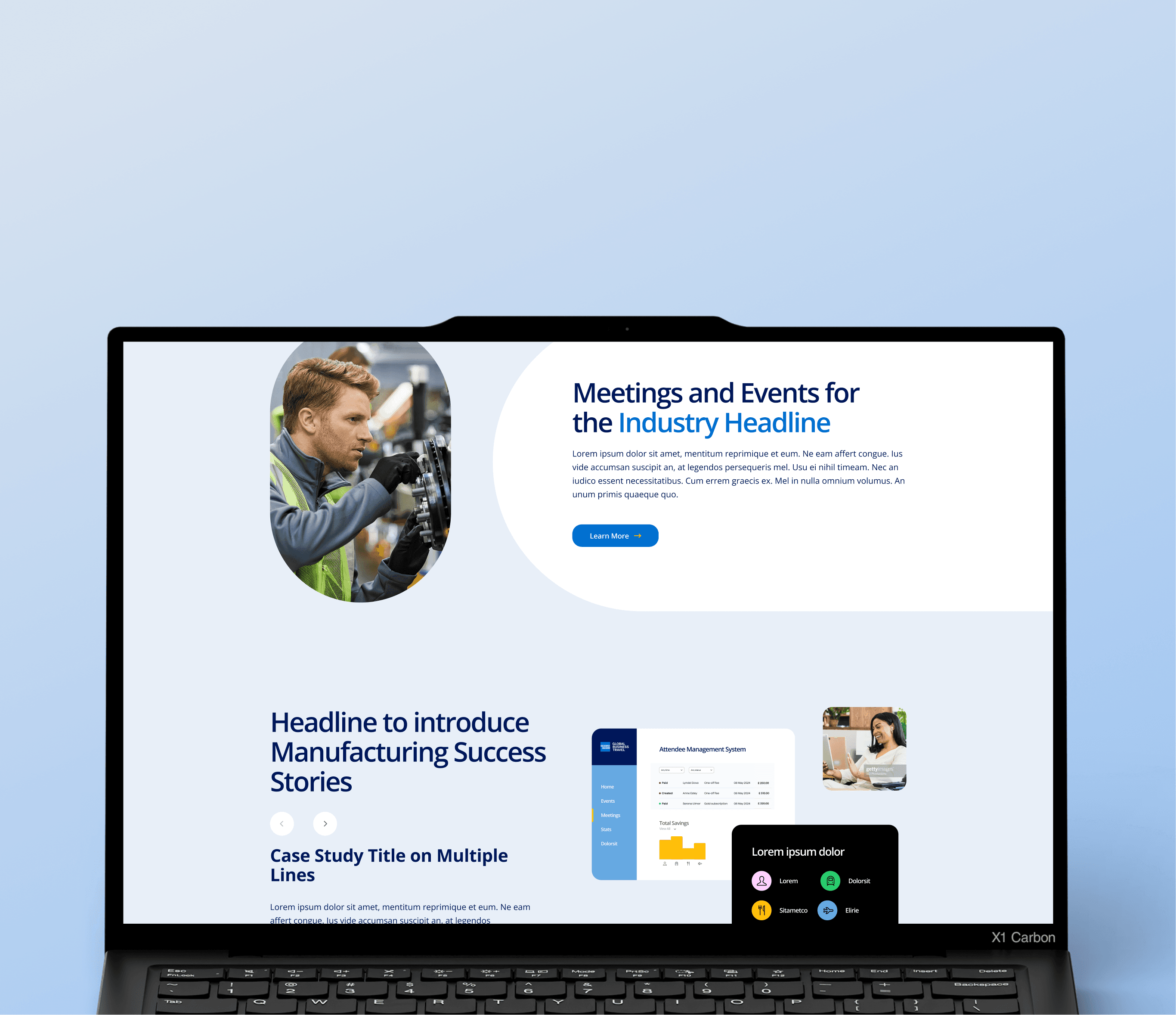
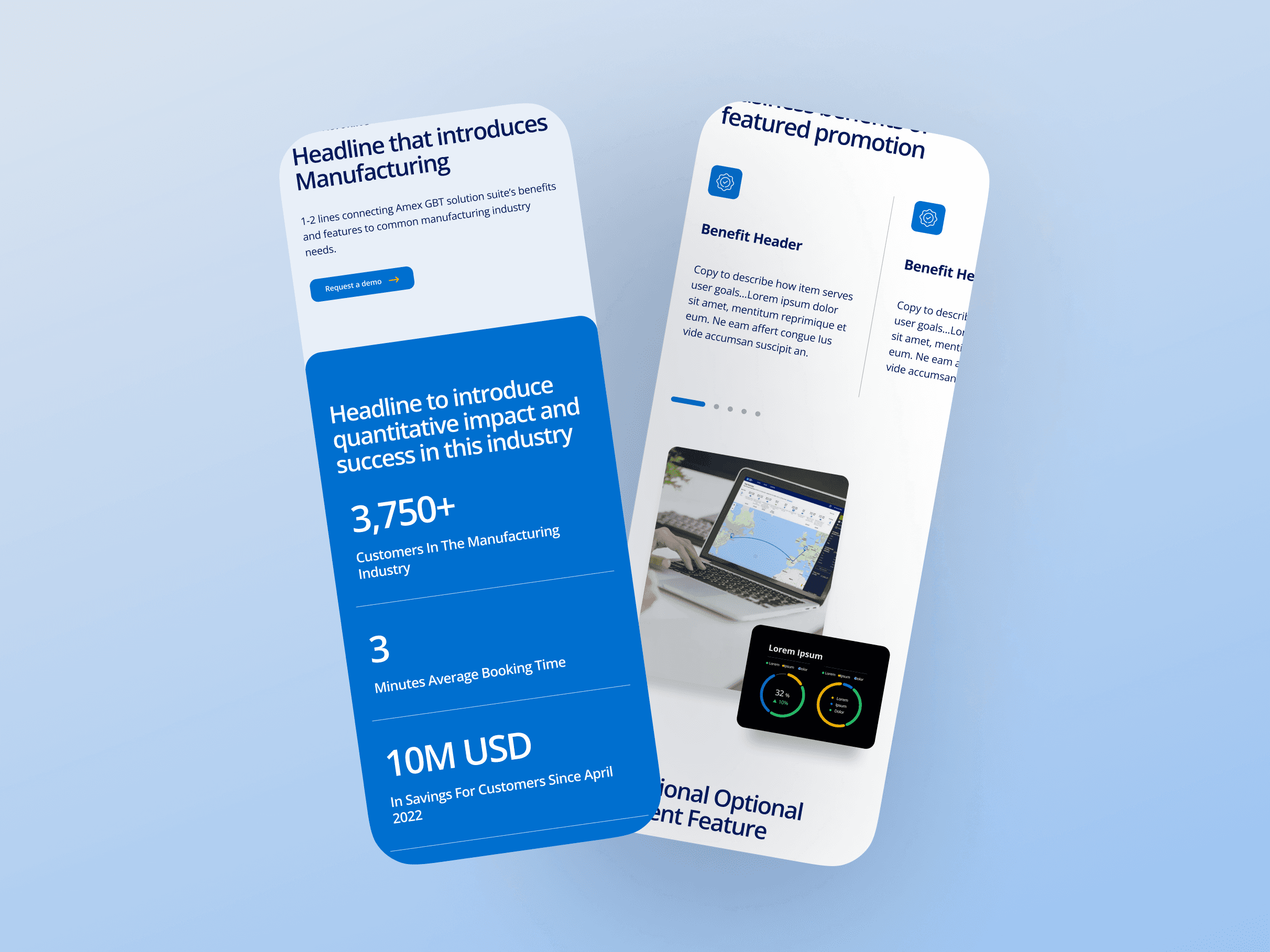
I designed 8 page layout templates built from flexible component modules that could be duplicated, rearranged, or deleted to serve multiple purposes across the site. This maximized coverage while staying within scope.

Component strategy

They had an existing component library from the previous rebrand. I made strategic calls on when to leverage existing components vs. when to design custom ones (we were scoped for 10 custom components). I worked closely with our BA to inventory usage precisely and ensure we were making smart tradeoffs between consistency and user experience.

Content as UX

The content strategist and I crafted each page template to tell a specific story—guiding users through a decision-making journey that supported lead generation at every step. Proof points, case studies, reasons to believe, and conversion opportunities were woven throughout.

Modular template system

I designed 8 page layout templates built from flexible component modules that could be duplicated, rearranged, or deleted to serve multiple purposes across the site. This maximized coverage while staying within scope.

Content as UX

The content strategist and I crafted each page template to tell a specific story—guiding users through a decision-making journey that supported lead generation at every step. Proof points, case studies, reasons to believe, and conversion opportunities were woven throughout.

Component strategy

They had an existing component library from the previous rebrand. I made strategic calls on when to leverage existing components vs. when to design custom ones (we were scoped for 10 custom components). I worked closely with our BA to inventory usage precisely and ensure we were making smart tradeoffs between consistency and user experience.

The Solution

We redesigned the complete information architecture and built a modular template system—collapsing complexity into clarity while giving content teams the flexibility to scale.

The 8 page templates covered the most ground across the site: homepage, software solutions landing page, solution detail page (Egencia), campaign landing page, industry page, Why GBT, resource library, and L2 content page.

Each wireframe was accompanied by a diagram mapping components back to their existing library, ensuring transparency and alignment with developers. I also worked with our BA to create documentation for all new components to ensure they'd be built with the flexibility we intended once they entered the CMS.
Impact & Outcomes

Six months post-launch, the CMO of American Express Global Business Travel validated our approach, calling the new website "one of the biggest success stories of 2025."
80% increase in site conversion rate
41% increase in daily form submissions
3% lift in AI overview placements

Other UX Improvements

Reduced bounce rates across key pages

Increased daily visits to solution detail pages

Improved navigation efficiency—users finding what they need immediately instead of circling back to the homepage

What This Demonstrated

This project required me to orchestrate UX across every discipline—setting the strategic direction, making critical IA and component decisions, and ensuring execution stayed true to the user experience vision. I didn't just simplify navigation or create templates. I led a cross-functional effort that turned a fragmented, underperforming digital presence into a unified, high-converting platform that became a company success story.
Portfolio

EXPLORE MORE WORK

EXPLORE MORE WORK

Mack Trucks

Transforming a Paper Process Into an Intelligent, Connected Digital System

Mack Trucks

Transforming a Paper Process Into an Intelligent, Connected Digital System

Sunrise Senior Living

Unifying 11 Luxury Brands Into One Scalable Template System

Sunrise Senior Living

Unifying 11 Luxury Brands Into One Scalable Template System